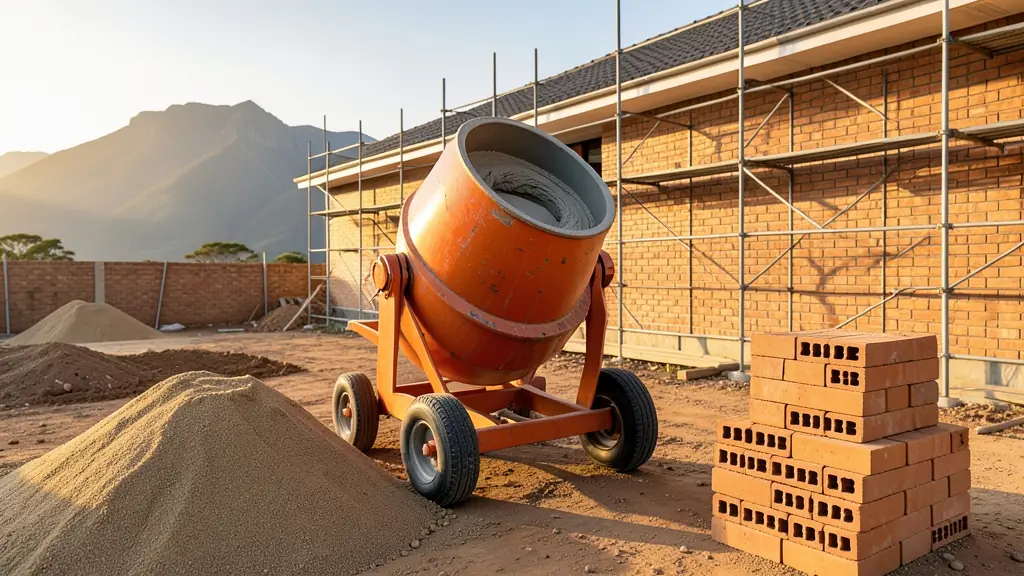
A concrete mixer turns cement, sand, stone and water into an even mix far faster than a spade. For a brick or block yard it matters as much as the machine, because every brick depends on the same mix, batch after batch. Site mixers are sold by drum size, from about 120 to 350 litres, and run on electricity or a petrol or diesel engine; bigger yards use pan mixers. You can buy new, buy used or hire by the day. Tell us what you need and independent suppliers and hire shops will send free quotes, with no obligation.
Types of concrete mixer
- Tilting drum mixers: the common site mixer, about 120 to 350 litres, for mortar, concrete and brick mixes.
- Small electric mixers: 120 to 180 litres on a normal plug, for home jobs and small batches.
- Petrol and diesel mixers: for farms and sites with no power.
- Pan mixers: a flat pan with paddles, better at the dry, stiff mixes that block and paver machines need, and often part of a plant.
Choosing the right size and power
Match the mixer to the machine. Work out how much mix your machine uses per drop and per hour, then choose a drum that keeps it fed without waiting. A drum is filled well short of its full volume, so a 350 litre mixer gives a smaller batch than the number suggests; ask for the working batch size. Choose electric where the supply is reliable, single phase for small mixers and often three phase for big ones, and an engine where it is not. For dry brick mixes, ask whether a drum mixer blends evenly enough or a pan mixer suits better.
Using a mixer safely and well
Load water first, then most of the sand, then cement, then the rest of the sand or stone, and mix for a set time so every batch matches. Measure by the bucket or barrow. Hose out the drum at the end of the day before mix sets on the blades. Keep the guards on, never reach into a turning drum, and use an earth-leakage protected outlet for electric mixers. Check the belt or gears and the grease points weekly. Common mistakes: overfilling, adding water by eye and leaving set concrete in the drum. Use clean building sand.
Concrete mixer price and hire rates
A new 120 litre electric mixer costs about R4,500 to R8,500, and a 350 litre mixer about R25,000 to R32,000. Concrete mixer hire runs roughly R230 to R600 a day depending on size. Ask each supplier or hire shop:
- the drum size and the working batch size
- the motor or engine and the power it needs
- for hire: the daily rate, deposit, delivery and fuel
- for buying: the warranty and where spares come from
What to include in your request
- Buy new, buy used or hire
- Drum size in litres
- Electric, petrol or diesel
- What the mixer is for
- Hire dates and the delivery address
Concrete Mixers for different clients
- Homeowners: a small electric mixer for paths, steps, slabs and mortar for a garden wall
- Builders and bricklaying contractors: a 350 litre site mixer for foundations, mortar and slabs on every job
- Housing developers and complexes: several mixers or a pan mixer for housing phases and on-site block making
- Brickyards and block yards: a pan mixer to keep a static machine supplied with an even, dry mix
- New brick-making businesses: the first mixer to feed a small egg-laying machine, bought new or used
- Farms and smallholdings: a petrol or diesel mixer for dams, troughs, kraals and farm buildings
- Municipalities, schools and public works: mixers for school, clinic and community building projects run by local teams
- Landscapers and paving teams: a mixer for paver bedding mortar, kerbs, steps and garden walls
Frequently asked questions
How much is a concrete mixer in South Africa?
Should I buy or hire a concrete mixer?
What size mixer do I need for a brick machine?
Can I use a small electric concrete mixer at home?
Concrete Mixers by province and city
- Johannesburg
- Pretoria
- Centurion
- Midrand
- Sandton
- Randburg
- Roodepoort
- Krugersdorp
- Randfontein
- Germiston
- Boksburg
- Benoni
- Kempton Park
- Alberton
- Vanderbijlpark
- Vereeniging
- Durban
- Pinetown
- Pietermaritzburg
- Richards Bay
- Newcastle
- Ladysmith
- Gqeberha (Port Elizabeth)
- East London
- Kariega (Uitenhage)
- Mthatha
- Cape Town
- Bellville
- Paarl
- Stellenbosch
- George
- Worcester
- eMalahleni (Witbank)
- Middelburg
- Secunda
- Mbombela (Nelspruit)
- Rustenburg
- Brits
- Klerksdorp
- Potchefstroom
- Mahikeng
- Polokwane
- Tzaneen
- Kimberley
- Upington
- Bloemfontein
- Welkom
- Sasolburg