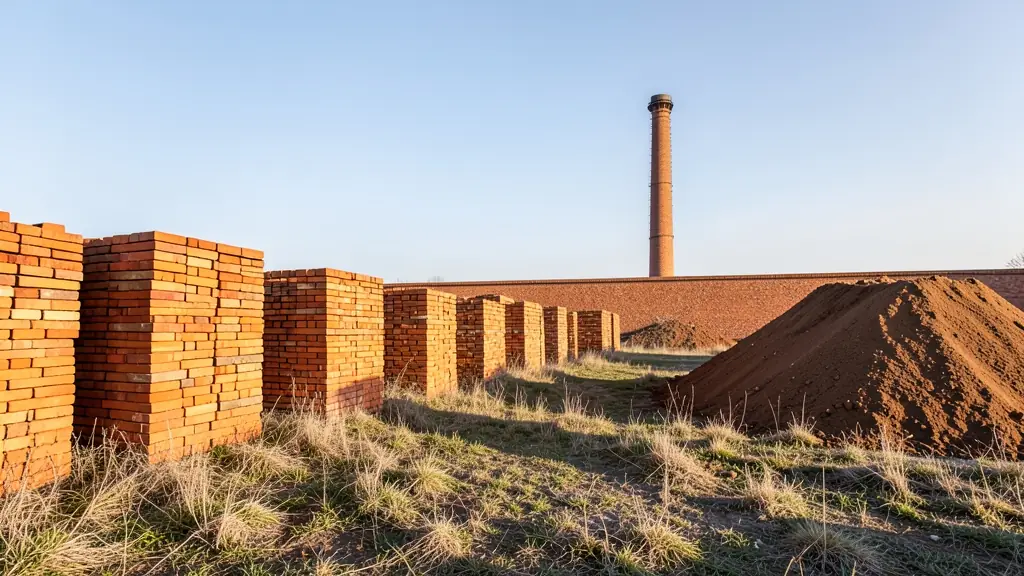
Clay bricks are made from clay and shale dug from the ground, shaped, dried and fired in a kiln until they are hard. Firing, not curing, gives them their strength and their colour, which runs right through the brick. South Africa has clay brickyards on old brickfields in most regions, making stock bricks for plastered walls, face bricks left bare, and clay pavers. This page covers the types of clay bricks, how to choose, laying and prices. Send one free, no-obligation request and brickyards near you quote you directly.
Types of clay bricks
- Clay stock bricks: also called common or burnt clay bricks, cheaper and meant to be plastered. They are the clay answer to the cement brick.
- Face bricks: made with tight control of colour and finish for walls left unplastered.
- Semi face bricks: between the two, for walls where small flaws don't matter.
- Clay paving bricks: dense pavers with colour that does not fade.
- Solid, perforated or frogged: holes and frogs make bricks lighter and help the mortar grip.
Choosing clay stock bricks or face bricks
If the wall will be plastered, stock bricks are the sensible buy. If it will be left bare, choose face bricks and look at a sample panel first. Burnt clay masonry units fall under SANS 227; ask the yard for the strength and grade and whether the bricks are tested. Clay bricks handle damp well and their colour lasts, which is one reason many builders like them for outside walls. Batches out of a kiln differ in shade, so order the whole job at once, especially for face brick.
How clay bricks are made and laid
At the yard, clay is dug, mixed with water, extruded or pressed into shape, dried and then fired in a kiln for days. Under-fired bricks are soft and pale and can crumble when wet; over-fired ones can warp. Tap two together: a clear ring is a good sign. On site:
- wet very dry bricks lightly in hot weather so they don't suck the water out of the mortar;
- keep 10 mm joints, brickforce in the bed joints and a damp-proof course;
- follow SANS 10400 on new buildings and use an NHBRC registered builder for a new house.
A bricklayer can quote per m² for the laying.
Clay bricks price and what to ask
Clay stock bricks usually cost about R2,350 to R3,500 per 1,000, roughly R2.35 to R3.50 a brick. On large orders in Gauteng, delivered prices start around R2,400 per 1,000. Face bricks cost more. Distance from the kiln matters, as clay bricks are heavy to truck. Ask the supplier:
- the grade and whether the bricks are made to SANS 227;
- whether delivery is included, and the smallest order it applies to;
- how many bricks a pallet or load holds;
- whether all the bricks come from one firing.
What to include in your request
- Say stock bricks or face bricks
- Give the number of bricks or the wall size
- Ask for bricks from one firing
- Give the delivery address and site access
- Ask for the price per 1,000 delivered
Clay Bricks for different clients
- Homeowners: clay stock bricks for a plastered house, garage or room addition
- Builders and bricklaying contractors: full truck loads of clay stock bricks booked ahead for each house
- Housing developers and complexes: large clay brick orders from one yard so a whole phase matches
- Brickyards and block yards: clay yards selling stock, semi face and face bricks from each firing
- New brick-making businesses: resellers buying clay bricks by the truck load for local builders
- Farms and smallholdings: clay brick farmhouses, sheds and kraal walls that handle damp well
- Municipalities, schools and public works: clay brick schools, clinics and halls built for a long service life
- Landscapers and paving teams: clay pavers, garden walls and planters with colour that does not fade
Frequently asked questions
What is the price of clay stock bricks?
What is the difference between clay bricks and cement bricks?
What are stock bricks?
Why are some clay bricks soft?
Clay Bricks by province and city
- Johannesburg
- Pretoria
- Centurion
- Midrand
- Sandton
- Randburg
- Roodepoort
- Krugersdorp
- Randfontein
- Germiston
- Boksburg
- Benoni
- Kempton Park
- Alberton
- Vanderbijlpark
- Vereeniging
- Durban
- Pinetown
- Pietermaritzburg
- Richards Bay
- Newcastle
- Ladysmith
- Gqeberha (Port Elizabeth)
- East London
- Kariega (Uitenhage)
- Mthatha
- Cape Town
- Bellville
- Paarl
- Stellenbosch
- George
- Worcester
- eMalahleni (Witbank)
- Middelburg
- Secunda
- Mbombela (Nelspruit)
- Rustenburg
- Brits
- Klerksdorp
- Potchefstroom
- Mahikeng
- Polokwane
- Tzaneen
- Kimberley
- Upington
- Bloemfontein
- Welkom
- Sasolburg