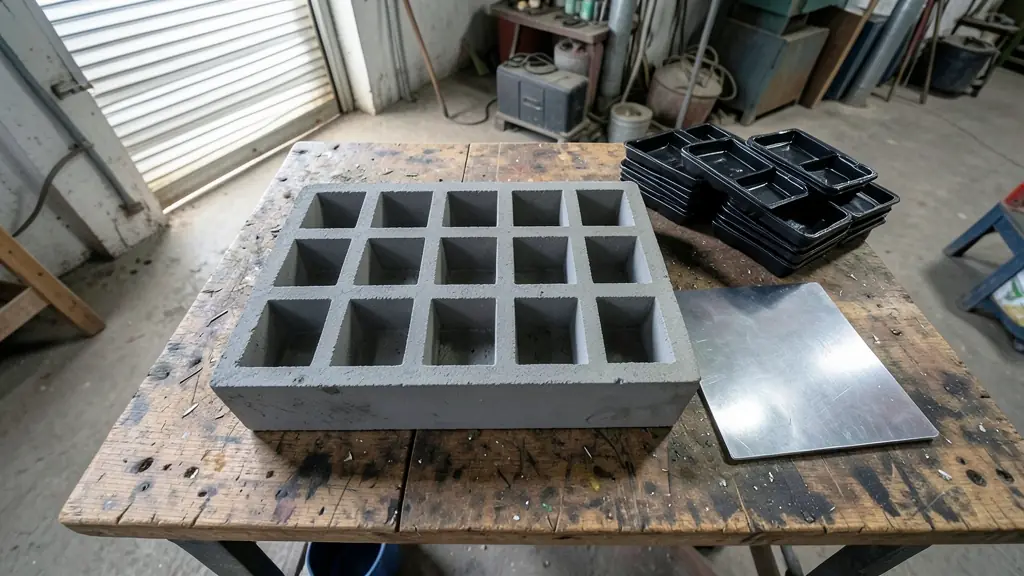
A brick mould is the steel or plastic form that shapes every brick, block or paver you make. On a machine it is a steel box divided into cavities, one brick per cavity, with a tamper that presses the mix down and pushes the bricks out. Off the machine, plastic and rubber moulds are filled by trowel and set on a vibrating table. A worn or badly made mould gives oversize, weak bricks, so it pays to buy carefully. Tell us the machine and the shape you need, and independent suppliers will send free quotes, with no obligation.
Moulds for bricks, blocks and pavers
- Machine moulds: heavy steel moulds that bolt into an egg-laying or static brick making machine, for stock bricks, maxis, hollow blocks or pavers.
- Moulds for concrete blocks: deeper, stiffer steel moulds with cores that form the hollows in a block.
- Plastic and rubber moulds: light, cheap moulds for pavers, cobbles, stepping stones and decorative shapes, used with a vibrating table.
- Simple open moulds: timber or steel boxes for clay or earth bricks made without a machine.
Choosing the right mould
A machine mould must fit your machine exactly, so give the supplier the machine type, the frame size and photos or measurements of your current mould. Decide on the cavities: more bricks per drop gives more per cycle, but needs stronger vibration and more mix each time. Check the liner thickness, the hardness of the wear plates and the welds. For plastic paving moulds, look for thick walls that hold their shape, and buy enough to keep the crew busy while the first batch sets. See paving machines for vibrating tables.
Using and caring for a mould
Clean the mould at the end of every shift, before mix sets in the corners, and wipe it with mould oil or release agent so bricks come out cleanly. Check the brick size every week with a tape: when bricks start growing, the liners are wearing. Never hammer a steel mould to free a stuck brick, because that bends the cavity. Store plastic moulds out of the sun so they do not warp. A worn steel mould can often be rebuilt by a repairer for less than a new one.
Brick mould prices and what to ask
Plastic paver moulds cost about R45 to R225 each for standard shapes, and larger decorative DIY moulds about R220 to R400. Steel machine moulds are quoted per machine and per shape, so ask the supplier directly. Ask:
- which machine the mould fits and how many cavities it has
- the steel thickness and whether the liners can be replaced
- the exact size of the finished brick, block or paver
- delivery, and how long a mould usually lasts
What to include in your request
- The machine the mould is for
- Brick, block or paver shape and size
- Number of cavities
- Steel or plastic
- How many moulds you need
Brick and Block Moulds for different clients
- Homeowners: plastic moulds for making your own pavers, stepping stones or garden edging
- Builders and bricklaying contractors: an extra machine mould so one machine makes bricks and blocks for a job
- Housing developers and complexes: spare moulds to keep machines running through a long housing project
- Brickyards and block yards: replacing worn moulds and adding new shapes that customers ask for
- New brick-making businesses: choosing the first mould shape to match what local builders buy
- Farms and smallholdings: a block mould for farm walls and stores on a machine you already have
- Municipalities, schools and public works: moulds for community projects making pavers and blocks for public spaces
- Landscapers and paving teams: decorative paver and edging moulds for small custom garden jobs
Frequently asked questions
How much does a brick mould cost?
How many plastic paving moulds do I need?
Can I use one brick mould on different machines?
How do I know my mould is worn?
Brick and Block Moulds by province and city
- Johannesburg
- Pretoria
- Centurion
- Midrand
- Sandton
- Randburg
- Roodepoort
- Krugersdorp
- Randfontein
- Germiston
- Boksburg
- Benoni
- Kempton Park
- Alberton
- Vanderbijlpark
- Vereeniging
- Durban
- Pinetown
- Pietermaritzburg
- Richards Bay
- Newcastle
- Ladysmith
- Gqeberha (Port Elizabeth)
- East London
- Kariega (Uitenhage)
- Mthatha
- Cape Town
- Bellville
- Paarl
- Stellenbosch
- George
- Worcester
- eMalahleni (Witbank)
- Middelburg
- Secunda
- Mbombela (Nelspruit)
- Rustenburg
- Brits
- Klerksdorp
- Potchefstroom
- Mahikeng
- Polokwane
- Tzaneen
- Kimberley
- Upington
- Bloemfontein
- Welkom
- Sasolburg