
Ash-Based Building Materials: Understanding the Foundation
Section: Elements of ash-based materials
In a country where the veld meets the skyline, ash isn’t waste—it’s raw material with a second life. A stat claims up to 60% of ash by weight can become brick material with the right binder and curing plan. The foundation section of ash-based building materials starts with recognizing ash as a binding companion, not a nuisance. When properly processed, it contributes pozzolanic activity, improved insulation, and lower embodied energy—exactly what South Africa’s sustainable building scene craves. In SA, making bricks from ash isn’t a gimmick—it’s a practical path.
Elements to consider include:
- Binder compatibility and curing behavior
- Particle size distribution and grinding
- Moisture control and drying regimen
In practice, the foundation hinges on balancing chemistry with practicality; making bricks from ash is the proof. Make the mix, test strength, and ensure SA standards—so it’s not talk at a braai, but brick that lasts.
Section: Mix design and preparation
In South Africa’s mixed horizons, ash isn’t waste—it’s a resource with a second life. A practical outlook on the mix design reveals that up to 60% of ash by weight can become brick material with the right binder and curing plan. This is the foundation of making bricks from ash—recognizing ash as a binding companion, not a nuisance, and letting climate, local aggregates, and ambition converge in one sustainable matrix.
Mix design and preparation become a study of balance—how to align chemistry with field practicality. We drift between a lab bench and workshop, contemplating how binders interact with ash, how the material grinds into the right size, and how moisture affects flow and cure. This is the mindset behind making bricks from ash—a grounded practice. The aim is to foresee performance and keep SA standards, letting the material reveal its strengths under conditions rather than loud claims at a braai.
Section: Manufacturing processes and equipment
Waste is wealth in disguise. On South Africa’s factory floors, ash isn’t a nuisance—it’s a raw feedstock for making bricks from ash. In pilot runs, controlled curing lifts compressive strength by up to 18%, a testament to what patience and precision can harvest from ash’s quiet potential.
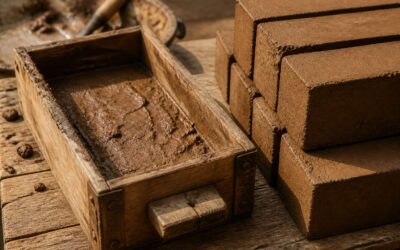
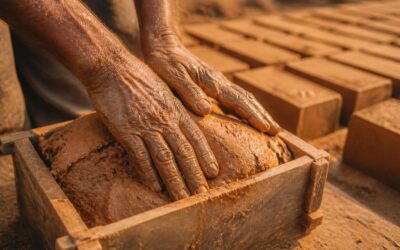
Manufacturing processes hinge on a careful choreography of milling, mixing, and molding. Fine ash blends with binder to form a homogeneous mass, moisture kept in check, and consistent compaction that respects the material’s flow. Equipment becomes the conduit through which science meets field practicality.
- Hammer or impact mills for ash sizing
- Pug mills or ribbon mixers for uniform blending
- Hydraulic presses or vibration tables for consistent compaction
- Precast drying kilns and curing chambers
QA alongside local standards—SANS protocols and environmental controls—guides every batch. Operators watch moisture, temperature, and humidity like a watchman with a pulse, because the marriage of ash, binder, and climate writes the brick’s future in stone and shadow.
Section: Performance and standards
From the ledger of performance, ash-based building materials rise with quiet authority. In South Africa, the numbers tell a compelling tale: strength, durability, and predictable behavior under humidity converge when ash is married to a measured binder. This act—making bricks from ash—a disciplined act of resource reuse—becomes design with a conscience.
- compressive strength and uniformity
- moisture migration and evaporation control
- thermal performance and long-term stability
QA dialogues with local standards—SANS protocols and environmental controls—guard every batch. Operators observe moisture, temperature, and humidity, because the architecture of a wall writes itself in climate as much as in clay and ash.
0 Comments