
The Raw Material: Sourcing and Preparing Construction Waste
Types of Rubble and Debris
Demolition sites in South Africa discard millions of tons of masonry annually. That mass is not worthless. It is the raw ingredient for making bricks from rubble, provided the material receives proper attention. Sourcing begins at the source: contractors separate concrete, brick, and tile on site before haulage. Unwanted steel rebar, timber, and gypsum board contaminate the batch if ignored.
Preparation demands screening and crushing. Large chunks pass through a jaw crusher, then a magnet pulls out ferrous metal. The remaining aggregate should be uniform in size, usually below ten millimetres. Dust and organic matter wash away during wet processing.
Common feedstocks include:
- Crushed concrete from foundations and slabs
- Red clay brick from wall demolition
- Roof tiles and terracotta offcuts
- Pavers and masonry offcuts
Each source alters the final brick’s density and strength, so consistent feedstock matters more than purity. Making bricks from rubble only works when the preparation is disciplined.
On-Site Sorting and Separation
Contractors who skip on-site sorting pay for it later. The rubble arrives at the crusher with rebar, timber, and lumps of gypsum board mixed together. That contamination creates weak bricks or damages equipment. Sorting must happen where the building falls. Use a tracked excavator with a thumb to separate concrete, brick, and tile into distinct stockpiles. Pull out steel and wood by hand. Keep the stockpiles separated and covered to prevent moisture and mud.
Follow this sequence for better results:
- Place concrete in one pile, brick in another, tile in a third.
- Pick out all metal and plastic before crushing.
- Sloped ground directs rainwater away from your stockpiles.
A consistent material stream is the foundation for making bricks from rubble. Without it, every subsequent step suffers. Even the best crusher cannot fix a pile that was mixed right after the wrecking ball left the building!
Cleaning and Crushing Techniques
Demolition sites in Johannesburg alone generate thousands of tonnes of waste every month. That waste can become new building material. The key to making bricks from rubble is controlling what enters the crusher mouth. We source material from strip-outs and renovations. Structural concrete and clean brick should be the only items on the feed belt. Preparation is where most contractors fail.
We follow a simple sequence to prepare the raw material:
- Break oversize pieces down with a hydraulic breaker.
- Pull out rebar and mesh with an overband magnet.
- Screen away dust and fines before primary crushing.
Cleaning happens before crushing, not after. We wash high-clay feed to prevent blockages. An impact crusher shapes the final aggregate into a uniform gradation. For making bricks from rubble, consistency is the goal. We test each batch for sulphate content and organic matter. The best crushing technique cannot fix a dirty feed.
Moisture and Contaminant Control
A single rainstorm can undo a week of sorting effort. Moisture causes the most trouble in this work. Wet feed clogs screens, dulls crusher teeth, and turns fine aggregate into mud. We track moisture at the stockpile, not just at the crusher. If the material feels damp, we let it dry for two days. That simple delay saves hours of downtime later.
Contaminant control starts with knowing what to reject. Plasterboard, timber, and plastics all find their way into the load. We inspect each batch for gypsum and soluble salts. These do not break down in crushing. They become weaknesses in the final brick. A quick visual scan plus a pH test gives us confidence.
- Reject anything with paint or sealant
- Look for white staining, a sign of efflorescence
- Check for buried wires or pipes
This vigilance makes making bricks from rubble reliable. The right moisture and clean feed mean the crusher runs smooth and the brick presses hold their shape.
Core Production Methods for Recycled Aggregate Bricks
Cement-Stabilized Aggregate Bricks
Construction waste in South Africa accounts for a third of landfill volume. Cement-stabilized aggregate bricks offer a route to making bricks from rubble that is both durable and practical. The production method relies on a straightforward recipe: crushed rubble, Portland cement, and water.
After sieving out dust and oversized particles, we blend the aggregate with cement at a ratio near 10:1 by volume. A small amount of water activates the binder. The mixture is compacted under high pressure, with a manual press or a small machine, forming a dense brick. Curing takes three weeks under a damp cloth or plastic sheeting.
The beauty of this method is its margin for error. A slight change in water content noticeably affects the final strength, so experienced operators monitor the moisture carefully. Making bricks from rubble this way requires no kiln, no firing, and little capital.
Geopolymer and Alkali-Activated Binders
Cement is the usual suspect, but it is not the only binder capable of turning debris into durable blocks. Geopolymer and alkali-activated binders offer a compelling alternative for making bricks from rubble, particularly where the environmental cost of Portland cement is a growing concern. These methods use industrial waste streams, such as fly ash or ground granulated blast furnace slag, to create a chemical reaction that glues the aggregate together. This process sidesteps the energy-hungry clinker production of traditional cement entirely.
The chemistry is fascinating, yet the process is surprisingly simple. When an alkaline solution, often a mix of sodium silicate and sodium hydroxide, meets the silicates and aluminates in the waste materials, a polymerisation reaction occurs. This creates a dense, three-dimensional network that binds the crushed rubble into a solid mass. Unlike the water-cement reaction, this process does not rely on forming calcium silicate hydrates, which means the resulting brick can be highly resistant to chemical attack and fire. I have seen test samples hold up remarkably well against aggressive sulphate-rich soils common in some South African regions.
For the practical maker, the workflow is familiar but with different inputs. The recycled aggregate is mixed with the dry precursor material, like fly ash. The alkaline liquid is then added, and the mixture is pressed into shape. Curing can take place at ambient temperatures, though a little heat can accelerate the strength gain. This approach to making bricks from rubble offers a way to valorise two waste streams at once. The main considerations are the consistency of the raw materials and the careful handling of the corrosive alkali solutions, which is a significant departure from the simple water mix of cement-based blocks.
The key steps for an operator are:
1. Proportion the dry precursor, such as slag, with the sieved rubble.
2. Prepare the alkaline activator solution to the correct molarity.
3. Mix the dry blend with the activator until a uniform, slightly damp consistency is achieved.
4. Compact the mix into a mould using a press to remove air voids.
This is not a casual backyard operation. It demands a better understanding of material chemistry than the cement route. But for those willing to master it, the payoff is a brick with a very low carbon footprint and excellent durability. The long-term behaviour of these binders is still being studied, yet the early results in pavement and masonry units are promising. They represent a shift from seeing rubble as a simple filler to viewing it as a key component in a new generation of construction materials.
Compressed Earth Blocks with Debris Content
Core production methods for recycled aggregate bricks depend heavily on the equipment available and the target strength. A vibrating table paired with a simple block press handles small batches well. It compacts the mix into a mould and expels trapped air, which is the main cause of surface cracking. For larger output, a stationary hydraulic press delivers consistent pressure across every unit, something a manual tamper cannot guarantee.
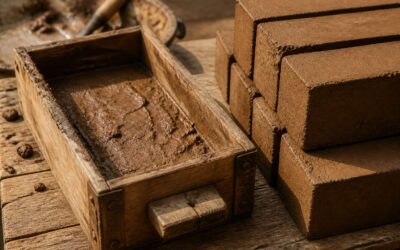
Compressed earth blocks with debris content follow a similar path, but the mix behaves differently. The crushed rubble acts as coarse aggregate, replacing the natural gravel or sand. This changes how the block shrinks during drying. Stiff mixes require more compaction force, while wetter mixes can deform after pressing. The real skill is knowing the moisture point where the block holds its shape without sticking to the press.
A typical sequence looks like this:
1. Sieve the debris to remove fine dust and oversized pieces.
2. Blend the aggregate with soil or a stabiliser in the right ratio.
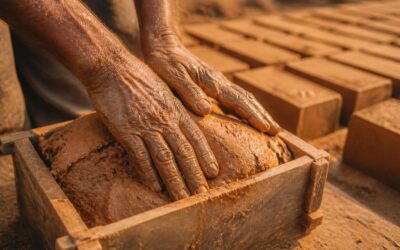
3. Add water gradually until the mix forms a ball that crumbles under light pressure.
4. Press the block and cure it away from direct sun.
The debris content also affects the surface finish. Rough particles create friction during ejection, and that wears out the mould box. Some makers coat the mould with a release agent to avoid this. Others rely on the natural moisture of the mix. Both approaches work, but one is cheaper and the other is faster. The choice is the difference between making bricks from rubble under a tarpaulin and doing it in a proper yard. The method you pick should match the number of blocks you need and the patience of the team handling the press.
Thermal Curing and Setting Processes
Skipping proper curing can cut the final strength of a cement-stabilised block by nearly half. That is a hard fact to swallow after a week spent at the press! I have seen yards where this step was ignored, and the blocks crumbled within a year, not from bad aggregate but from fast drying.
Thermal curing solves this by slowing the loss of moisture. Wet hessian, shade netting, or a simple chamber built from pallets and plastic sheeting keeps the surface damp while the interior sets. Heat matters, but only when the surface stays wet.
Steam curing at 40 to 60 degrees Celsius accelerates hydration. For a yard making bricks from rubble, that speed matters when winter cold stalls the setting reaction. A basic boiler and hose can push demoulding strength from seven days down to 48 hours. Consistency beats intensity.
Geopolymer mixes respond differently. Curing above 70 degrees Celsius doubles early strength, but sudden temperature swings crack the aggregate matrix. The margin between useful heat and damaging heat is narrow.
Additive Manufacturing Approaches
Additive manufacturing changes the logic of making bricks from rubble. A robotic arm deposits a slurry of crushed aggregate and binder layer by layer, building a block without a mould. This allows hollow cores and interlocking geometries that reduce mortar use.
Some yards test extrusion systems that push the mix through a nozzle. Others use binder jetting, where a print head applies a geopolymer solution onto a packed dust bed, hardening only the desired shape.
- Printing complex shapes from recovered aggregate
- Embedding steel mesh during deposition
- Adjusting layer thickness to control porosity
The trade-off is capital cost! A basic printer costs more than a manual press. But for custom elements like curved wall blocks, additive methods eliminate expensive moulds. In my experience, material variability from recycled debris demands careful calibration of particle size and moisture.
Essential Equipment and Machinery
Crushers and Pulverizers
Before the city’s bones are reborn as brick, they must be ground to dust. The crusher’s maw greets the rubble first, its appetite for reinforced concrete both brutal and necessary. Here in South Africa, where dense dolerite and quartzite dominate the earth, a robust jaw crusher sets the stage. It reduces the chaos of broken slab into a feed size your secondary machines can manage. An impact crusher then takes over, slamming material against steel plates until the softer mortar falls away from the harder stone.
The pulverizer finishes the work, adding the finesse that separates a brick from a boulder. I can tell you, this is no single act but a procession of grinding and attrition. The path to making bricks from rubble demands careful machine selection:
– Jaw crushers for primary reduction
– Impact crushers for secondary shaping
– Ball mills for fine pulverization
– Roller crushers for consistent grading
Each machine exacts its toll in wear and energy. In this dusty theatre of transformation, choosing the right tool is an act of wisdom.
Mixers and Blenders
The mixer is where the dry and wet elements finally merge. In making bricks from rubble, the binder and the aggregate must meet with absolute evenness. A pan mixer, with its rotating blades, remains the stalwart of South African brickyards. The twin-shaft mixer offers a faster cycle, its counter-rotating paddles forcing the materials into collision. This is where the blend becomes uniform.
For smaller operations, a drum mixer might suffice. Consistency matters more than size. If one patch of the mix holds more cement than another, the brick will fail. I have watched operators read the slump of the load and listen to the sound of the paddles. Every batch carries its own character.
Hydraulic Presses and Molds
The hydraulic press does not negotiate. It applies force until the material yields. For making bricks from rubble, the mold directs that force. A worn or warped mold leaves a defect on every brick. I have seen operators run a finger along the mold edges before a shift, checking for wear.
The press cycle must match the aggregate. Fast cycles create trapped air. Slow cycles cost production. In South Africa, the static press remains the standard for making bricks from rubble. The mold box requires regular truing. Check for:
- Edge wear on the liner plates
- Tolerance on the ram guides
- Surface pitting from abrasive fines
These small defects become cracks in the final block. Precision in the mold determines the brick’s survival.
Screening and Grading Systems
Rubble arrives in chaos. It leaves the crusher as a jagged spectrum of sizes. The screen deck sits between those two states. For making bricks from rubble, this sorting step determines the block’s integrity. In South African plants, the trommel screen remains a common first cut, with vibrating screens handling the finer fractions.
A screening and grading system does more than sort rock. It shapes the aggregate’s surface area, packing density, and reaction to cement or geopolymer binders. Oversize particles create stress points. Fines below 75 microns can absorb binder and weaken the matrix.
Operators monitor the screen mesh daily. Blinding, where fines clog the apertures, remains the operator’s main concern. A consistent gradation curve is the goal, because making bricks from rubble depends on that consistency.
Common aperture sets include:
- 25 mm scalping for oversized debris
- 6 mm cut for coarse grit
- 1.18 mm separation for fine sand
Each fraction feeds a different mix design.
Quality Control Instruments
A block can look flawless and still hide a hundred silent fractures. That is the quiet reality of this industry. The visible surface rarely tells the truth about what waits inside. For those serious about making bricks from rubble, the verification stage is where illusions break. You are not just testing product. You are testing whether your entire process holds up under pressure, day after relentless day.
The instruments used here are not accessories. They are the difference between a confident delivery and a costly site failure, months down the line. A reliable compressive strength tester gives you the raw data behind every stack. A digital moisture meter tells you whether your drying process is a friend or an enemy. The real professionals track these numbers constantly, and they know that a single afternoon of neglect can undo a week of careful production.
Some operations also lean on sonic testing for internal flaws, while a simple scale and caliper set still catches more defects than most people expect.
Key checks happen in a specific sequence:
1. Compressive strength testing on cured samples after 7 and 28 days.
2. Moisture content verification before and after curing.
3. Dimensional tolerance checks to ensure uniform block size.
4. Efflorescence observation to spot potential staining later.
Quality control is ultimately a dialogue with your own consistency. Shortcuts only shift the problem downstream, usually to a customer who will not forgive the mistake. When you commit to making bricks from rubble, the laboratory becomes your conscience. It keeps you honest when production speed tempts you otherwise. That is the real value of a calibrated machine. It offers no comfort, only truth, and for those who want longevity, truth is the only sustainable foundation.
Sustainability Benefits and Environmental Impact
Waste Diversion and Landfill Reduction
South Africa produces millions of tonnes of building waste every year, and much of it ends up in landfills that are running out of space. Making bricks from rubble directly tackles this problem by keeping concrete, brick, and tile out of the dump. The process reduces the volume of debris that requires burial, extending the lifespan of existing landfill sites. This is especially critical in provinces like Gauteng, where waste infrastructure is under strain.
The environmental impact goes further than saving space. Reusing rubble cuts the need for virgin aggregate extraction, which preserves sensitive landscapes and reduces energy use. It also lowers emissions from hauling heavy materials across long distances. When stone and cement are sourced locally from demolition waste, the carbon savings accumulate.
Key outcomes from this approach include:
– Fewer loads of waste sent to landfill
– Lower methane generation from decomposing debris
– Reduced contamination of soil and water systems
Making bricks from rubble transforms a costly liability into a durable building material. This circular method aligns with global sustainability targets while addressing South Africa’s unique waste challenge.
Carbon Footprint Comparison
Measuring the carbon footprint of conventional clay bricks against making bricks from rubble reveals a stark contrast. Firing virgin clay demands kilns at extreme temperatures for days, while rubble based bricks often cure at ambient temperature or with modest heat. That difference alone cuts embodied energy per unit.
Transportation adds further weight to the comparison. Hauling fresh aggregate from distant quarries burns diesel, but demolition waste sits within our own cities. Every kilometre saved shrinks the emissions ledger.
- Virgin brick production emits roughly 0.5 tonnes of CO2 per 1,000 bricks
- Debris based bricks can reduce that figure by 40 to 60 percent
These figures matter in a country where cement production already strains the national carbon budget. The move toward making bricks from rubble gives South Africa a practical lever on climate targets, turning waste streams into low carbon building stock.
Life-Cycle Assessment
Making bricks from rubble is a circular move with measurable gains. A life-cycle assessment shows lower energy input per unit and less strain on water systems. These bricks also reduce demand for new quarrying, preserving landscapes and biodiversity.
The benefits persist after installation. Rubble based bricks retain structural integrity for decades, and their local sourcing shortens transport routes. That cuts emissions and keeps supply chains steady.
- Reduced embodied energy across production
- Lower water consumption during curing
- Extended material lifespan through reuse
Environmental impact assessments confirm that making bricks from rubble avoids the disruption caused by virgin extraction. The life-cycle analysis shifts from a linear model to a regenerative one, which matters for South Africa’s building sector.
Circular Economy Integration
Making bricks from rubble is a direct answer to South Africa’s mounting construction waste. The circular economy integration rethinks the entire supply chain rather than simply recycling material. Every tonne of crushed concrete diverted from landfill becomes a foundation for new housing. Environmental impact drops when we avoid quarrying fresh stone. The sustainability benefits appear in lower transport emissions and reduced water usage during curing. I see making bricks from rubble as a way to preserve the memory of old structures while building new ones. The soil stays unbroken, and the community gains.
Energy and Resource Conservation
I watch the stockpiles of broken concrete at a Cape Town yard and see a resource ready for reuse. When we talk about making bricks from rubble, we measure the true cost of extraction against the quiet gain of reuse. Each brick cuts the need for diesel-heavy haulage.
The energy story is straightforward. Crushing and pressing what exists consumes a fraction of the kiln fuel needed to fire virgin clay. We skip the mining, skip the pulverising, and spare the water normally used to wash raw materials. The savings appear in the carbon ledger before a single wall rises!
Every tonne of rubble saves:
- Roughly 1.2 tonnes of virgin stone left in the ground.
- Hundreds of litres of water retained in the catchment.
- Kiln fuel otherwise destined for emissions.
That is the quiet power of making bricks from rubble, keeping the landscape intact while meeting housing demand.
Challenges, Performance Standards, and Market Adoption
Structural Strength and Durability
Less than ten percent of South Africa’s construction and demolition waste finds a second life. That statistic explains the tension facing anyone attempting making bricks from rubble. One load delivers granite chips and clay shards; the next, concrete fragments and tile dust. The variability alone can break a production schedule!
Performance standards raise the bar. SABS 227 demands compressive strength testing, water absorption limits, and dimensional checks that frustrate hurried operations. I have watched small producers abandon the process after a failed batch. Yet in Gauteng, contractors now specify rubble-derived masonry for boundary walls. Market adoption follows proof, and proof takes patience.
- Compressive strength of 7 MPa or higher for load-bearing walls
- Water absorption under 10 percent after immersion
- Efflorescence rated slight to moderate
Structural strength and durability ultimately persuade skeptics. Making bricks from rubble remains a niche practice in South Africa, though no longer a quirk.
Building Codes and Certifications
Making bricks from rubble sounds lovely on a PowerPoint slide. In practice, the challenges arrive with the first loader bucket. One day you get brick bats and mortar; the next, broken pavers and glass. Each load demands a different recipe.
Performance standards exist to tame that chaos. Certification bodies expect consistent batches, and they run checks that make a laboratory technician frown. Your production line needs disciplined sampling and record keeping. For instance:
- Compliance with SANS 1083 for masonry units
- Certificate of conformity from an accredited lab
- On-site density checks before every pour
Market adoption follows trust, and trust follows certifications. Municipal building control officers want documentation, not anecdotes. Once approved, rubble bricks become just another product in the contractor’s catalogue. That shift, from waste to warrantable material, is where the industry quietly grows.
Cost Competitiveness
Every load of rubble differs. One day you get brick bats and mortar, the next day broken pavers and glass. The recipe has to shift accordingly. Water demand changes, binder ratios change, and the press behaves differently. Ignore that variability and the units come out inconsistent.
Performance standards separate reliable products from the rest. Specifiers want compressive strength and water absorption data at regular intervals, plus:
- Durability results against weathering
- Dimensional tolerance records
- Batch-by-batch density logs
Making bricks from rubble only gains market adoption when the price competes with fired clay. Plants near demolition sites save on haulage, and that saving lands in the final unit price. Contractors adopt what saves them money, not what feels virtuous.
Consumer and Industry Acceptance
Every truckload of demolition waste in South Africa has a different composition of brick, concrete and mortar. Making bricks from rubble means adapting the mix to whatever arrives, and that variability is the real challenge. One day the press runs wet, the next day it binds too fast, and the operator must adjust every batch.
Performance standards are the industry’s language. Independent compressive strength tests, water absorption records and density logs, verified through a SANAS accredited laboratory, tell specifiers whether the material performs as a brick should. Third-party verification outweighs any factory’s own claims.
Consumer and industry acceptance follows proof, not promise. Different stakeholders ask different questions:
- Homeowners want durable houses.
- Contractors want predictable schedules.
- Engineers want certified numbers.
Making bricks from rubble gains ground the way all new building materials do: one project at a time, without surprises, until the market stops calling it recycled and simply calls it brick.
Future Innovations and Research Directions
Every truckload of demolition debris differs in composition. That variability is the central obstacle to making bricks from rubble at scale. Operators adjust moisture, binder ratios and compaction pressure batch by batch, yet small shifts in aggregate composition can alter curing behaviour overnight.
Performance standards anchor credibility. Independent SANAS accredited testing for compressive strength, water absorption and density gives engineers numbers they can trust. Those results, rather than factory claims, earn specification.
Market adoption follows proof. Homeowners want durable houses, contractors want predictable schedules, engineers want certified data. Future research should explore automated mix optimisation using real time sensor feedback and standardised protocols for blended debris feedstocks.
- Automated rheology monitoring for fresh mixes
- Machine learning calibration from batch history
- Durability tracking across climate zones
Such innovations will turn a variable waste stream into a dependable material, making bricks from rubble an ordinary choice.
0 Comments