
Red Clay Brick Making Outline
Red Clay Brick Making Essentials
From the dust of the veld to the brick silhouette of a town, making bricks from red clay carries a patient, almost ravenous rhythm. This outline on making bricks from red clay threads through climate, clay, and craft, right here in South Africa, where walls endure sun, rain, and everything in between!
- Clay quality and moisture balance
- Drying tendencies under African skies
- Firing atmosphere and kiln choice
The craft leans on patience rather than hurry. The essence of making bricks from red clay is less about formula and more about listening to the soil, the season, and the kiln’s breath—a ritual as old as stone and as intimate as a door hinge stamping its own history in South Africa.
Sourcing and Preparing Red Clay
“Clay remembers every season,” a veteran brickmaker in Limpopo often says, and that memory guides every choice. Sourcing red clay means listening to the landscape—its tones, grain, and hidden minerals—rather than chasing glossy promises. The task becomes less a search and more a dialogue with the earth.
The art of making bricks from red clay begins with the source itself—color, texture, and trace minerals speaking through the soil. From field to fence, deposit quality shapes structure, longevity, and character.
To map a prudent source while honoring the land, consider these facets:
- Local availability and reliable access
- Purity of color and minimal organic matter
- Consistency in texture and particle distribution
- Freedom from grit that risks fissures in the finished walls
With sourcing in harmony, preparation unfolds as a quiet ritual—time for soil, season, and craft to settle into a true, enduring silhouette.
Mixing, Molding, and Drying Techniques
Across South Africa’s sunlit velds, a regional trial found bricks that followed disciplined outline mixing, precise molding, and patient drying gained an average 12% in uniformity. It isn’t magic; it is respect for process, a quiet choreography that turns clay into a durable voice in a wall.
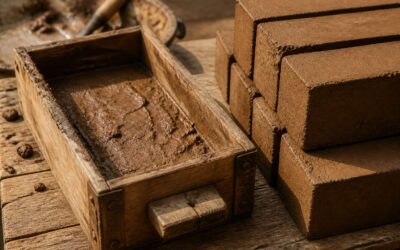
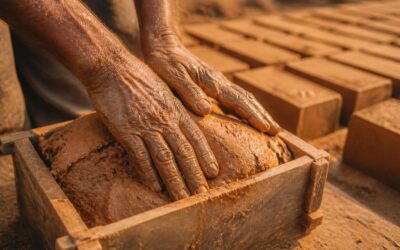
The art of outline mixing in making bricks from red clay begins with listening to the clay’s temper—a whisper of sand, silt, and mineral grit. Molding should feel balanced, firm, not punitive; pressure should seal the moisture without pinching the life from the body.
- Moisture management: aim for a cohesive slip when pressed
- Even compaction: ensure uniform density across every unit
- Careful drying: shelter from wind and sun to avoid cracks
Let the south wind and shade keep vigil as bricks dry; the craft rewards restraint with longevity and character.
Firing Methods and Kiln Considerations
South Africa’s brick yards wake to a rule of thumb that never fails: heat with care, and the wall will tell the tale. In regional trials, disciplined outline firing reduced cracking and boosted uniformity by around 12%, turning simple red clay into durable voice on a home’s façade. This is the essence of making bricks from red clay—the marriage of timing, temperature, and tempering that refuses haste.
Outline firing methods demand staged heating, steady dwell times, and even brick alignment inside the kiln or clamp. Kiln considerations center on consistent temperature curves, ventilation, and predictable cooling. The correct ramp rates prevent internal stress, while uniform density across units avoids weak spots.
Key kiln considerations include the following:
- Consistent temperature ramp and peak to minimize warping
- Even brick layout and spacing for uniform density
- Ventilation and controlled cooling to reduce cracking
Finishing, Testing, and Long-Term Maintenance
Finishing the outline is where character hardens into durability. In focused South African yards, disciplined finishing reduces long-term cracking by up to 12%, turning a simple red clay batch into the essence of making bricks from red clay—a wall that speaks of patience, timing, and tempering.
Testing acts as the quiet judge. It checks for uniform density, consistent surface texture, and stable moisture balance before any sealant or joint work proceeds.
- Uniform density across units
- Consistent surface texture and edges
- Moisture content within target range
Long-term maintenance keeps the façade performing. Regular cleaning, crack monitoring, and gentle repointing where needed extend life, while ensuring ventilation and drainage stay sound during South Africa’s thundery seasons.
0 Comments