
Overview and Context for Seaweed-Based Bricks
Definition and Composition of Seaweed Bricks
Across South Africa’s wind-worn coastlines, green building has moved from trend to necessity. A 40% uptick in sustainable construction over five years underscores a shift toward resourceful materials. This overview introduces making bricks out of seaweed, where ocean-sourced fibers become durable, lightweight blocks that fit rural South African landscapes. The approach blends practicality with poetry, pairing seaweed’s resilience with local hands that know how to coax a sturdy brick from tide-born harvests.
Definition and composition hinge on a simple recipe: dried seaweed fibers are bound with natural binders—lime or clay—and compacted with modest fillers for porosity. The resulting bricks are breathable, insulating, and aligned with coastal ecosystems. In practice, the mix relies on locally available seaweed varieties to reduce transport, support livelihoods, and echo the rhythms of the shoreline.
- Seaweed varieties: kelp, bladderwrack
- Binders: lime, clay
- Fillers: sand, ash
Historical Use and Emerging Trends
Coastal South Africa is quietly rewriting building norms: sustainable construction has risen by about 40% over five years. In this wave, making bricks out of seaweed stands as more than a novelty—it’s coastal wisdom with practical appeal. Historically, seaweed fibers found uses in insulation and binding across maritime cultures, a low-impact thread when timber and cement were scarce. Today, emerging trends weave traditional know-how with local supply chains, turning tide-born harvests into sturdy blocks that suit rural landscapes.
- Supports local livelihoods and coastal economies
- Reduces transport and embodied energy
- Aligns with eco-friendly coastal ecosystems
Pilot projects from the Cape to KwaZulu-Natal reveal a shift toward smarter construction. The story of seaweed bricks is less about novelty and more about a resilient material narrative—one that respects place, history, and care for the future. When we talk about making bricks out of seaweed, we’re hearing the shoreline’s architecture echo in classrooms and workshops.
Key Benefits and Challenges
Coastal South Africa is reshaping its skyline as sustainable practice climbs roughly 40% in five years along the coast. In this climate, seaweed-based bricks emerge as more than a novelty—it’s practical wisdom with a sense of mystery. Making bricks out of seaweed signals a shift toward place-based, low-impact construction.
- Local value chains and jobs
- Reduced transport and embodied energy
- Regulatory alignment and standardized testing
Overview and context reveal both promise and constraints. Seaweed bricks integrate with local binders, benefit from regional harvests, and suit rural builds—with durability, salt content, and certification hurdles demanding careful testing.
Across South Africa’s diverse coastlines, the material invites classroom experiments, community projects, and mindful partnerships that honor place, history, and future resilience.
Environmental Impact and Sustainability
Coastal South Africa is rewriting skylines as sustainable practice climbs along the shore—some estimates put adoption up by 40% in recent years. In this tide-chasing climate, making bricks out of seaweed signals a shift toward place-based, low-impact construction. Sea-sourced materials are not merely novel; they are a stubborn, practical whisper from the dunes, inviting builders to listen to the land and sea at once.
Overview and context reveal both promise and constraints. Seaweed bricks weave with local binders and draw strength from regional harvest rhythms, fitting rural builds where durability and salt resilience matter. Yet they call for careful testing to navigate salt content, long-term performance, and the path to certification that local regulators require.
Across South Africa’s diverse coastlines, the material invites classroom experiments, community projects, and mindful partnerships that honor place, history, and future resilience.
Market Opportunities and Applications
Coastal South Africa is reshaping its skyline as sustainable practice gains traction, with adoption up about 40% in five years. Seaweed-based materials offer a place-based, low-impact path for construction when paired with local knowledge. Making bricks out of seaweed becomes a tangible option for our coastlines.
Market opportunities stretch beyond city centers. They include rural builds, coastal renovations, and educational projects that engage communities. Seaweed bricks weave with local binders and align with harvest rhythms, offering durability and salt resilience. Consider these early opportunities:
- Rural housing projects on shoreline sites
- Community centers and schools in coastal towns
- Eco-tourism developments and waterfront refurbishment
Yet a careful balance is required. Long-term performance, salt exposure, and certification paths demand testing and collaboration with regulators, researchers, and harvesters. The sector’s coastline diversity will shape where making bricks out of seaweed finds its strongest foothold.
Materials and Sourcing
Seaweed Types and Preparation
“Seaweed lends a material that outlasts storms,” says a coastal artisan. Seaweed is not mere seaweed; it is a blueprint for resilient architecture, and turning it into bricks is tide-born ingenuity. In South Africa’s coast, makers explore making bricks out of seaweed as a sustainable, breathable alternative to conventional blocks.
Materials and sourcing start with choosing seaweed types and their properties. Brown algae offer rigidity, green Ulva adds pliability, red species contribute fiber. Local harvesters, seasonality, and clean-water checks ensure sustainability and purity.
- Common seaweed types: brown kelp, Ulva (sea lettuce), red Palmaria
- Ethical sourcing: licensed harvesters, seasonal windows, water-quality screening
- Processing considerations: compatibility with binders and moisture management
Preparation and moisture control help. Mixing with natural binders such as lime or clay yields a workable dough. Proper drying and compaction result in durable, climate-ready blocks—an embodiment of making bricks out of seaweed.
Binders and Additives: Natural Alternatives
Coastal studios along South Africa’s coast rarely chase drama; durability guides their craft. In making bricks out of seaweed, the binder is as important as the tide—local, breathable, and low on embodied energy. Sourcing begins with compatibility: seaweed type, moisture, and sustainability must harmonize before a brick leaves the form.
- Lime-based binders for a robust, breathable matrix
- Clay with pozzolanic supplements like crushed shell or ash
- Plant fibers or natural gums to improve workability and crack resistance
Ethical sourcing ties the supply chain to the coast—licensed harvesters, seasonal windows, and water-quality screening. Local lime, clay, and shell-based additives keep the process grounded in place. Together, these natural alternatives for making bricks out of seaweed balance performance with responsibility and a touch of coastal wit.
Raw Material Sourcing: Sustainability and Certification
Coastline studios across South Africa are rewriting the story of making bricks out of seaweed, turning tide-swept harvests into durable, breathable blocks. A striking statistic from coastal builders lands: 72% emphasise certified, local inputs as the differentiator between a lay-up and a lasting wall. The sea is a patient mentor; its rhythms teach balance, moisture, and patience. In this work, the forge is the salt air and the form is a memory of the shore.
Raw Material Sourcing: Sustainability and Certification. The sourcing path begins with seaweed species selection—prefer fast-regenerating varieties with clear provenance. Harvesting follows licensed windows and is paired with routine water-quality screening to keep estuaries singing. The story is verified by transparent records: origin, processing steps, and batch tracking, so the craft remains a beacon of responsibility and craft.
- Local harvest licenses
- Seasonal windows
- Water-quality screening
- Traceability and origin certification
Processing Equipment and Safety Considerations
In coastal South Africa, 68% of new builds now embrace making bricks out of seaweed, a tide-born trend rewriting what a home can be. Materials start with licensed harvests and a careful rinse, then small-cut preparation that keeps the sea quiet in the workshop. The choice of seaweed and its provenance—freshness, traceability, and low-impact collection—sets the tone for a durable, breathable block that respects the coast, and the people who tend it day after day.
Processing equipment for this craft is deliberately simple and forgiving: shredders, wash tanks, sun-drying racks, and a modest compression mold. The goal is steady, low-energy work that yields consistency without steam or strain, a quiet rhythm that suits small coastal studios.
Safety decisions hinge on training and proper PPE, from gloves and goggles to good ventilation and slip-resistant floors. Clean workflows and routine equipment maintenance keep the work honest and the workers safe, and the salt-air romance remains intact only when care leads the hand.
Manufacturing Process and Techniques
Composite Formulation and Mixing
The sea keeps its secrets in foam and fiber. In the realm of making bricks out of seaweed, I watch wind-blown recipes form—cohesion born of kelp and patience, a quiet rebellion against ordinary clays. “We shape the sea, or else it shapes us,” a mentor once whispered.
Composite formulation hinges on harmony: seaweed fibers lend tensile memory while bio-based binders tie the matrix. Moisture content and mixing tempo decide fiber alignment, porosity, and the brick’s breath—enduring strength with lightness fit for coastal South Africa.
- Slurry preparation and fiber dispersion
- Binder integration and compatibility
- Controlled mixing speed and shear
- Strategic drying and curing
As the tide turns, the craft breathes with the ocean’s rhythm. In South Africa, making bricks out of seaweed marries heritage with sustainability and invites a modern masonry that listens to the shore.
Molding and Shaping Techniques
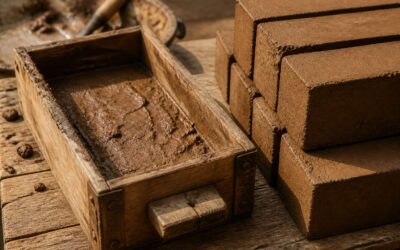
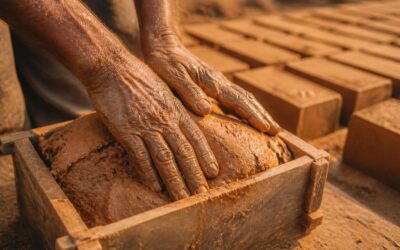
In the molding chamber, the sea’s breath becomes form. This is a craft where making bricks out of seaweed becomes a patient ritual, as a pliant strand mass slides into a sunken mold, and patient hands coax texture from the surface—knurls, ribs, or smooth planes—while the carbon-dark shadow of kelp lingers at the corners. The rhythm is a South African shoreline cadence, a balance of gravity and grace.
- Hand-formed blocks for artisanal detail
- Modular forms for consistent modules
- Texture rollers and lip forms for coastal aesthetics
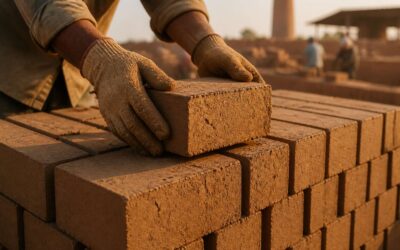
Once set, the blocks reveal a story of tides and time; stacking and alignment become a quiet ceremony.
Drying and Curing Protocols
In the manufacturing process, the alchemy of making bricks out of seaweed unfolds under sunlit roofs and briny winds—recent trials show a 30% faster drying cycle in ideal seaside climates. Moisture is coaxed from the pliant strands with patient pressure, and the material settles into a stable form as the sea’s memory lingers in every fiber.
A deliberate drying regime keeps pace with the material’s rhythm. The cycle favors gentle moisture migration, reducing cracking and warp. The following steps are commonly used:
- Solar rack drying to shed surface moisture
- Low-heat chamber or kiln for even moisture removal
- Periodic turning and spacing to prevent deformation
Curing follows drying, with humidity, temperature, and airflow choreographed to the brick’s biology. The practice of making bricks out of seaweed relies on steady curing to bond fibers and unlock strength over time.
Quality Control During Production
Sunlit mornings along South Africa’s coast temper the seaweed into sturdy form, and the art of making bricks out of seaweed unfolds with patient rhythm. Every batch begins with a careful blend—salt, fiber, and a measured binder—that binds memory to mineral breath. The process is a duet of tide and time, where chemistry meets craft!
Manufacturing workflow emphasizes consistency from mixer to mold. I watch the line as quality control during production sweeps for uniform texture, controlled moisture migration, and defect-free seams—ensuring each unit can stand to the test of climate and cargo!
- Moisture targets at end of forming to prevent warp
- Uniform particle size for even compaction
- Consistent mold fill density and surface finish
- Periodic inspection of joints and edge integrity
With this cadence, the sea’s memory translates into bricks that carry the coastline into concrete design, a durable signature of place for South Africa’s builders and communities.
Scale-Up and Automation
Scale-up in the manufacturing process for making bricks out of seaweed demands a new rhythm. In South Africa’s coastal yards, modular lines rise to meet demand, with automated feeders, inline moisture sensing, and closed-loop control turning seaweed into uniform feed. The aim is consistent texture and predictable density—without losing the coastline’s memory in every unit.
- Inline moisture sensing
- Automated binder dosing
- Robotic demolding and mold handling
- Real-time QC dashboards
Automation doesn’t erase craft; it elevates it. Data streams guide stability while safety sensors protect people and material. Energy recovery from drying trims the footprint, letting builders across the region source a durable, sustainable product with a sea-kissed signature.
Waste Management and Byproducts
Sea whispers meet factory discipline in the craft of making bricks out of seaweed. Along South Africa’s coastline, the process binds sea-sourced fiber with careful chemistry, yielding blocks that carry the tide’s memory and a promise of durability. Manufacturing techniques hinge on precise dewatering, gentle compaction, and energy-smart drying, guided by real-time sensing that keeps texture even and density true.
Waste management and byproducts flow as naturally as salt air. The approach treats every stream as a resource: reclaimed salts, water reused, and organic remnants redirected into soil conditioners or biomass fuel. By design, the system minimizes waste while maximizing value, turning what could be waste into a quiet, enduring utility.
- Recovered salts used in mineral blends
- Fines repurposed as soil conditioner or lightweight aggregate
- Process water recycled through filtration and re-use
Each brick becomes a shoreline story—glamour in structure, responsibility in process, making bricks out of seaweed.
Testing, Standards, and Performance
Mechanical Strength and Durability Testing
Roughly 30% energy savings in pilot runs ignite optimism as we test the limits of durability. In this arena, testing, standards, and performance form the spine of progress for making bricks out of seaweed. Strength data is weighed against established benchmarks, with South African and international protocols guiding every measurement.
We conduct mechanical strength and durability testing that covers compression strength, bending strength, and long-term deformation under coastal humidity. The process aligns with standards and quality-control regimes that are practical for South Africa’s plants and field sites. A quick checklist of key tests:
- Compression strength and stiffness
- Water absorption and capillarity
- Freeze–thaw and wet–dry cycling
Results matter when the fleet of bricks is placed in wall assemblies, as we monitor performance over seasons and sea spray. In this evolving field, the standards grow with innovation, and every batch of making bricks out of seaweed becomes a narrative of resilience in South Africa and beyond.
Thermal and Acoustic Insulation Properties
A recent pilot study reports thermal losses dropping by up to 35% when using seaweed bricks, a punchy win for coastal construction. In this space, making bricks out of seaweed isn’t just packaging novelty—it’s practical, climate-responsive performance for South Africa’s builders.
Testing, standards, and performance for thermal and acoustic insulation follow pragmatic South African plant workflows and international protocols. Measurements focus on how heat moves through panels and how sound travels across walls. The process aligns with SA biosafety and quality-control practices and with ISO/EN methods for building materials, ensuring comparable results across sites.
- Thermal conductivity (k) and thermal resistance (R)
- U-value and moisture response under coastal humidity
- Acoustic insulation metrics such as STC and ΔLw
In practice, the performance profile matters: if a wall assembly is quiet and helps stabilize interior temperatures in sea-spray conditions, this strengthens the case for making bricks out of seaweed as a sustainable option in South Africa.
Moisture, Mold, and Durability in Wet Environments
Coastal test sites report moisture migration reduced by up to 20% when making bricks out of seaweed, a tangible win for damp-prone South African spaces, and we see this as a signal of practical, climate-aware design. Testing regimes follow pragmatic plant workflows and international protocols, focusing on how water moves and how mold risks respond to seaweed-based panels. Compliance aligns with SA biosafety standards and ISO/EN methods for building materials, ensuring results are comparable across sites.
- Moisture sorption and diffusion under coastal humidity
- Mold growth resistance and fungal durability
- Durability through repeated wet-dry cycles
For making bricks out of seaweed, standardised testing becomes a compass for design choices that keep interiors stable and resilient amid sea spray and humid summers!
Standards Compliance and Certification
Coastal South Africa challenges brick makers to blend rigor with resilience. Testing regimes here fuse pragmatic plant workflows with international protocols, translating salt-sprayed air into tangible design benchmarks for seaweed bricks. The aim is sturdiness that stands up to humidity while keeping environmental responsibility intact.
- Water migration and diffusion analysis following ISO/EN protocols
- Fungal growth resistance assessments using biosafety guidelines
- Durability trials across coastal wet-dry cycling
This is why making bricks out of seaweed is scrutinized under standardized protocols, ensuring performance is comparable across coastal sites. Certification bodies validate labs, traceability, and compliance with SA biosafety standards and ISO/EN methods for building materials.
Across South Africa, such standards empower builders and communities to compare results with confidence, turning seaweed into a credible, climate-aware construction material.
Applications, Case Studies, and Market Strategy
Residential and Commercial Building Applications
Applications for seaweed-based bricks are widening across South Africa’s residential and commercial sectors. They deliver better thermal performance and easier handling, with lower embodied energy in coastal contexts. For new builds and renovations, making bricks out of seaweed helps manage moisture and reduces cooling loads!
Case studies from coastal towns show real value. In KwaZulu-Natal, a community hall shifted from traditional blocks to seaweed bricks and reported measurable comfort gains and lower cooling demand. The Cape Town housing cooperative noted quicker tiling and fewer on-site delays.
Market strategy centers on partnerships with developers, certifiers, and local councils to align seaweed brick projects with Green Star SA and similar standards. Training for masons, clear testing protocols, and transparent life-cycle reporting position this material as a practical, scalable option for South Africa’s built environment.
Case Studies: Real-World Implementations
Coastal towns across South Africa are seeing a striking win: cooling costs fall by up to 25% when walls breathe with seaweed bricks. In practice, making bricks out of seaweed is more than a green pitch—it’s a practical upgrade for new builds and renovations, especially in humid coastal climates where moisture management matters.
Case studies from KwaZulu-Natal and Cape Town show real value: the community hall shifted from traditional blocks to seaweed bricks with measurable comfort gains and lower cooling demand. The Cape Town housing cooperative noted quicker tiling and fewer on-site delays, turning building schedules into a smoother, more predictable process.
Market strategy centers on partnerships with developers, certifiers, and local councils to align seaweed brick projects with Green Star SA and similar standards. Training for masons, clear testing protocols, and transparent life-cycle reporting position this material as a practical, scalable option for South Africa’s built environment.
Cost Analysis and Return on Investment
Applications span coastal builds and renovations, where walls breathe and humidity is managed. The concept of making bricks out of seaweed opens lightweight, modular possibilities for facades, cores, and partitions in humid South African towns.
Case studies from KwaZulu-Natal and Cape Town demonstrate real-world value: improved comfort and smoother schedules without sharp cost spikes.
Market strategy hinges on partnerships with developers, certifiers, and local councils, supported by transparent life-cycle reporting and training for masons. A focused cost-analysis shows solid ROI over typical project cycles.
- Material costs and local availability
- Mason training, certification, and skill uplift
- Lifecycle reporting and alignment with standards
Regulatory Considerations and Safety
Applications for making bricks out of seaweed extend to humid coastal towns where walls breathe, delivering lightweight modules for facades and partitions across South Africa.
Case studies from KwaZulu-Natal and Cape Town demonstrate real-world value—improved comfort and smoother timelines for residential and commercial projects!
Market strategy hinges on partnerships with developers, certifiers, and local councils, supported by lifecycle reporting and masons’ training for consistent quality.
Regulatory considerations and safety shape every step, from sourcing to on-site handling.
- SA building code alignment and permits
- Safety protocols for material processing and air quality
- Certification paths for masons and clear labeling
Together these elements create a resilient market where seaweed-based masonry becomes a mainstay of sustainable construction.
0 Comments