
Clay Brick Making: A Structured Outline for SEO
Clay brick making fundamentals
In South Africa, brick accounts for more than 60% of residential walls, a statistic that underscores the enduring appeal of clay construction. The practice of making bricks from clay blends craft with engineering, yielding walls that weather heat, rain, and time—while communities redefine what home means. This is a study in patience, material intelligence, and place-based character.
This piece offers a structured outline for SEO, focusing on clay brick making fundamentals without jargon. It emphasizes material behavior, sourcing, and context, ensuring the topic resonates with local audiences and search engines alike.
- Material sources and clay conditioning
- Workability, texture, and plasticity signals
- Local kilns, fuels, and firing considerations
Beyond technique, the narrative invites readers to reflect on heritage, sustainability, and the social footprint of production. The outline becomes a lens for content creators shaping an accessible, thoughtful exploration of clay craftsmanship in South Africa.
Raw materials and clay selection
In South Africa, more than 60% of residential walls are clay brick, a stubborn nod to durability that outlives trends. The starting line in any project is raw materials and clay selection—the quiet handshake between earth and builder. Saying ‘making bricks from clay’ signals a partnership with place and time.
Choosing the right clay hinges on workability and texture, not romance or poetry. Here are the signals to read in the field:
- plasticity at workable moisture for even shaping
- low salts and impurities to minimise efflorescence
- consistent particle size for uniform firing and colour
Where clay comes from matters as much as the clay itself. Local sources shape colour, shrinkage, and cost, while communities and ecosystems weigh on every batch. In exploring this craft, producers weigh proximity, seasonality, and the social footprint of extraction.
The right raw materials keep the conversation with bricks honest.
Forming and molding techniques
More than 60% of South Africa’s residential walls are clay brick, a stubborn nod to durability that outlives trends. In the world of making bricks from clay, forming is the handshake where earth meets the press, and time stamps the result with character.
From a high-level perspective, shaping options range from tactile hand-moulding to mechanical processes that compress and shape at scale. Here are the main pathways:
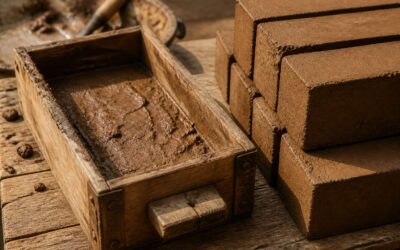
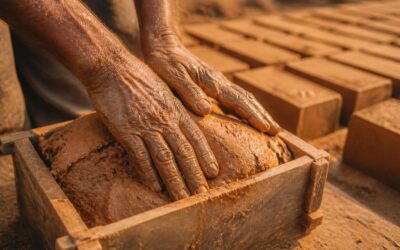
- hand-moulded bricks with wooden or steel forms
- mold-press bricks for uniform faces
- extruded bricks for continuous length and consistency
Each method influences texture, water absorption, and how the brick finishes after firing. As you plan projects, think about scale, equipment availability, and the local climate; these factors shape outcomes more than glossy specifications ever could.
Drying, curing, and brick aging
“Moisture is the quiet multiplier of strength,” a veteran brickmaker once said. Dry days transform raw clay into bricks that endure, a testament to patient craft!
Drying is a staged ritual, from ambient air to controlled moisture release. A few practical options fit South Africa’s climates:
- Air drying in shaded yards, a traditional approach that reduces surface cracking
- Kiln or shed drying, a method that balances heat and humidity
- Windbreaks and moisture-retaining covers to support even drying
Curing continues after removal from forms, a quiet second life for bricks. With time, texture and hue mature, giving the clay its enduring personality.
In the arc of making bricks from clay, drying, curing, and brick aging weave resilience into every wall.
Firing methods and kiln technology
Firing methods and kiln technology form the quiet engine of making bricks from clay. In South Africa, a well-tuned kiln cycle translates patience into performance. “Firing is the heart,” a veteran brickmaker often says, and this heartbeat guides every durable wall we help build.
This “Clay Brick Making: A Structured Outline for SEO Firing methods and kiln technology” focuses on energy efficiency, temperature control, and quality assurance as essential pillars for the South African climate.
- Gas-fired, electric, or hybrid kilns tailored to brick design
- Controlled temperature profiles and dwell times for uniformity
- Pyrometric cones and thermocouples for real-time feedback
Through careful alignment of kiln choices with brick design, we honor the land and the hands that shape it—returning resilience to walls across towns and farms.
Quality control, testing, and standards
Every wall begins with trust—a belief that the brick in your hand will stand for decades. In South Africa, where climate swings from radiant sun to sudden rain, quality control in making bricks from clay is a daily vow. One veteran QA supervisor often says, “quality is the heartbeat that steadies every bond.” That heartbeat guides our approach to testing and standards, weaving integrity into every batch.
This section anchors our process in formal standards and careful measurement. We monitor moisture content, compressive strength, water absorption, and dimensional tolerances. Non-destructive tests and selective core sampling surface defects before they become costly problems, ensuring that each brick responds reliably to its future environment—whether fading light on a township home or wind-beaten walls on a farmstead.
- Moisture content and batch consistency
- Dimensional tolerance and straightness
- Compressive strength and load performance
- Surface finish and defect detection
- Water absorption and durability testing
Through this standards-driven lens, making bricks from clay becomes a heritage—honoring land, labor, and the quiet resilience of walls that hold communities together.
0 Comments